The Rainbow Hosta That Will Never Grow
Or: How an AI Invented a Plant and Someone Started Selling the Seeds
There is a plant for sale on Facebook that does not exist.
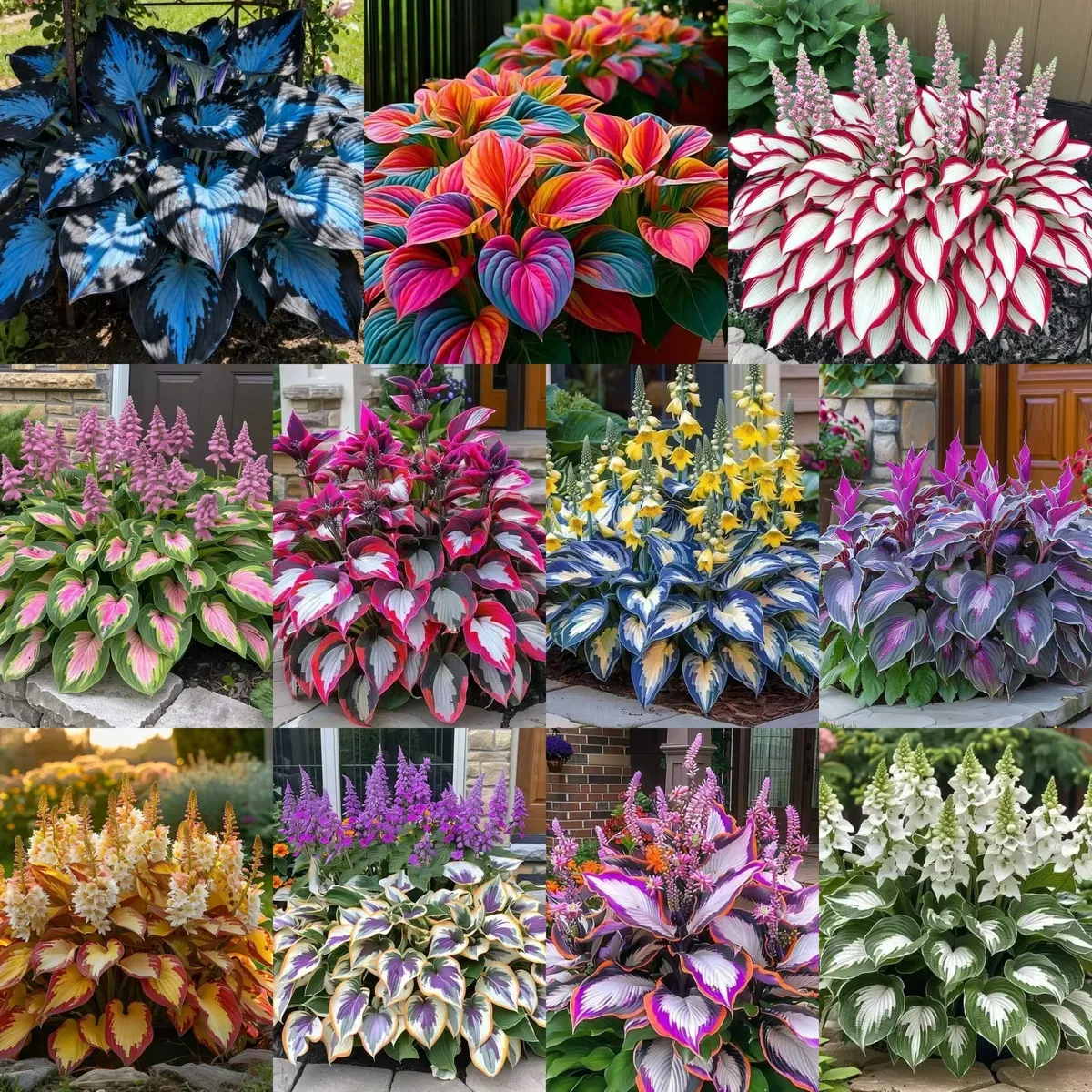
It is called the Rainbow Hosta. Also the Fiery Crimson Hosta. Also the Midnight Blue Hosta. Also the Pink-Green Hosta, the Champagne Fog Hosta, and the Blue Porcelain Hosta.
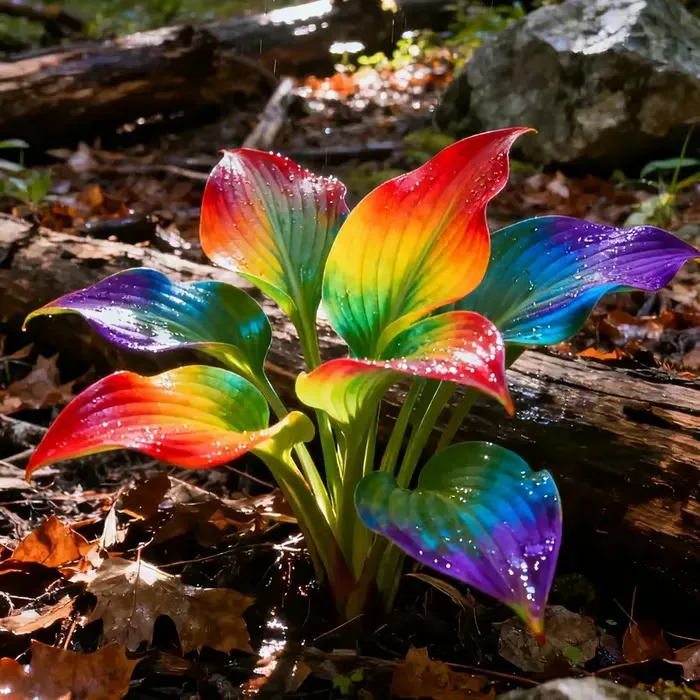
The images are genuinely beautiful. Leaves in electric pinks, deep crimsons, iridescent rainbows, and luminous sapphire blues that seem almost too vivid to be real.
They are too vivid to be real. They were generated by an AI asked to imagine "rare hosta", and it complied enthusiastically without any particular knowledge of what a hosta actually is or what colours one is capable of producing.
The seeds are €11.99 for 200, marked down from €22.99. You are saving 49%. The page informs you that 272 have already been sold, 1,000 people are currently browsing, and 263 people have personally recommended this product.
All of those numbers are fiction. They are widgets, generating urgency and social proof from nothing. But we'll come back to that.
What a Hosta Actually Does
I grow things on my patio in the Italian Alps. Not hostas specifically, but I know enough about plants to know when something is botanically impossible, and everything about these images is botanically impossible.
Hostas are shade-loving perennials with foliage that ranges from deep green through blue-green to yellow-green and various combinations of variegation. They are elegant, dependable, and genuinely beautiful in the right conditions. What they are not is pink. Or crimson. Or rainbow. Or any of the other things the AI has confidently invented for them.
Here is a quick tour of the available varieties and why none of them exist:
Rainbow hostas are not rainbow. No plant presents colour in the way shown. Midnight Blue hostas do exist but they are a muted, glaucous blue-green, not the luminous sapphire in the photograph. Fiery Crimson hostas do not produce red foliage in any meaningful or stable way. Pink-Green, Purple Beauty, and Champagne Fog are similarly fictional, the last one being not a cultivar at all but simply a phrase that sounds expensive.
The names were chosen to match the images. The images were chosen to separate you from your money.
The Biological Problem Nobody Mentions
Here is what the product page does not tell you, buried under the urgency widgets and the discount countdown.
Hostas can be grown from seed. That part is true. But they do not grow true to type.
If you collect seeds from a genuine prize hosta, one with real variegation in real colours, the plants that emerge will almost certainly not resemble the parent. Most will be plain green. Some may be slightly variegated. None will look like the catalogue image, because the catalogue image was generated by software that has never seen a garden.
The only reliable way to reproduce a specific hosta variety is through division, splitting the plant at the roots, or through tissue culture. Every named hosta in every garden centre is a clone propagated by one of these methods. You cannot grow a named variety from seed. It does not work that way.
The seeds in these packets, if they are hosta seeds at all, will produce ordinary plants. Possibly weeds. Possibly nothing.
They will not produce a rainbow. The rainbow does not exist.
The Clever Part: The Return Window
This is the most carefully designed element of the whole operation and it deserves a moment of genuine appreciation for its cynicism.
The page offers a 45-day return policy. This sounds reassuring. It is not.
Seeds take time. They must be planted, germinated, and grown on. By the time a hosta seedling has developed enough to reveal its true character, which will be ordinary green, months have passed. The 45-day window closed long ago.
And what would you return? The seeds you already put in the ground? The pot of soil? The weeks of hopeful watering?
The return policy exists to reduce hesitation at the moment of purchase. It is not designed to be used. It cannot be used. It is a reassurance with no practical function, and whoever designed this page understood that perfectly.
The Standard Machinery
The rest of the page is familiar infrastructure to anyone who spends time looking at this kind of thing.
"272 Sold" is presented as verified fact. It is not verified. It is a number on a widget. "1,000 people are currently browsing" creates the impression of competition for limited stock. "263 Personal Recommendations" has no source, no names, and no mechanism for verification. It is simply a figure, chosen to sound credible.
The tiered pricing encourages volume. Buy 200 seeds for €11.99 or buy 2,000 seeds for more money and grow two thousand ordinary plants instead of two hundred. The discount deepens as the quantity increases, because the marginal cost of printing more fiction on a packet is essentially zero.
Each element serves the same purpose: remove doubt, manufacture urgency, encourage larger purchases.
The Real Cost
This particular grift does something slightly worse than just taking money, and I say this as someone who grows things and understands what gardening actually involves.
Gardening is an act of patience. You plant, you water, you wait. The waiting is part of the experience, the anticipation of what's coming, the small daily checking, the first signs of emergence. It is genuinely one of the more satisfying things a person can do with their time.
Here, the waiting is weaponised.
You plant the seeds in good faith. You check them. You care for them. You imagine the electric pink leaves unfurling in the shade of the balcony. Weeks pass. Months pass. What emerges is ordinary, or nothing at all.
The hope was the product. The seeds were simply the delivery mechanism.
By the time you understand what happened, the return window is closed, the money is gone, and the growing season is half over.
What You're Actually Buying
This is not a gardening store. It is a dream dispensary.
It sells images, not plants. The images are AI-generated. The plants are impossible. The social proof is fabricated. The urgency is manufactured. The return policy is theatrical.
The person who buys these seeds is not foolish. They love plants, they were shown something beautiful, and they wanted it to be real. That is a completely human response to a well-constructed fiction.
But the page that sells the fiction, with its artificial scarcity and invented recommendations and return window carefully calibrated to expire before reality arrives, is a small, precise machine for converting the love of growing things into revenue.
The rainbow hosta does not exist.
It never did.
Your plain green seedlings, if they emerge at all, will at least be real.
Paul is 71, writes from the Italian Alps, and grows borage, bee-friendly plants, and a certain amount of scepticism on his balcony. He has never grown a rainbow hosta. Nobody has. The €11.99 was not spent on seeds. It went on espresso and sunflower hearts, both of which produced exactly the results advertised.
Comments ()